Original research on markets and their participants.
Coverage
Brazil election 2026
Prediction markets
Browse live odds by topic +65.8 ptsWinner's move in the 12 hours before the 2025 announcement
Nobel Peace Prize odds: 2026 result, saved forecast and 2025 study
Navi Pillay won the 2026 Nobel Peace Prize. Compare the official result with our frozen forecast, dated 2026 market snapshots and the 2025 study of prices before the announcement.
 62.1%Milwaukee Brewers, 2026 champion price
World Series 2026 Odds: Brewers 62%, Rays 38%, After the Dodgers Led 264 of 271 Days
The Milwaukee Brewers are 62.1% to beat the Tampa Bay Rays in the 2026 World Series on Polymarket, against 2.2% on 1 February. The Dodgers led the market on 264 of its 271 days and were swept. In 2025 the Dodgers fell to 10.5% in Game 7 and won.
 −72.0 ptsVinícius Júnior's fall on the 2024 ceremony day
Ballon d'Or 2026 Odds: Kane 67% a Week Out, and the 89.5% Favourite Who Lost in 2024
Harry Kane leads Polymarket's 2026 Ballon d'Or market at 67.1% a week before the London ceremony. In 2024 Vinícius Júnior was 89.5% a week out and lost: the price turned in 24 minutes on the afternoon of the ceremony. In 2025 Ousmane Dembélé was 85.2% and won.
 47.03%Flávio Bolsonaro, first round
Brazil Election 2026: Runoff Date, Polls, Odds and Results
Brazil votes again on 25 October. Follow the Lula–Flávio Bolsonaro runoff with dated polling, market odds and links to official TSE results.
 77¢Flávio Bolsonaro, Polymarket Yes offer
Brazil Election Polls vs Polymarket Odds: What the Numbers Mean
A 51% vote share and a 77¢ election contract answer different questions. A dated Brazil example explains polls, probabilities, spreads and uncertainty.
 20:00 UTCOfficial results begin
Brazil Election Results 2026: When Counting Starts and Where to Check
Brazil's runoff is on 25 October. Official results begin after 17:00 Brasília. Check UTC and local times, the TSE portal and partial-count labels.
 22European jurisdictions with a public action on record
Prediction Markets in Europe: Sixteen Blocking Orders, and Only Three Are Measured
Every European regulator's action on Polymarket and Kalshi, dated and sourced: 22 jurisdictions, sixteen blocking orders, one penalty, one licensing regime. Eleven of the sixteen blocks are not applied by Polymarket itself, and only France, Spain and Switzerland have network tests.
 $8Platform charge on $1,000 of traded value
Gate Polymarket Fees: The Extra $8 on a $1,000 Trade
A worked guide to Gate's platform charge and the separate Polymarket protocol fee, including maker orders, fixed spending and a round-trip example.
 31%The favourite range won, two days before the close
Elon Musk Tweet Count on Polymarket: 101 Rounds Checked, the Favourite Wins 1 in 3
We checked 101 rounds of Polymarket's bet on how many times Elon Musk posts on X in a week. Two days before a round closes, the crowd's favourite range wins 31% of the time, close to its 34% price. When the crowd is wrong, Musk has usually posted more than it expected, not fewer.
 84.5%Sports and esports share of Polymarket's dollars, Sunday 27 September 2026
Is Polymarket Just Sports Betting? 84.5% of Its Money on an NFL Sunday
On Sunday 27 September 2026 sports and esports took 84.5% of the dollars traded on Polymarket and 83.8% of the contracts. Over sixteen months the dollar share ran from 31% to a low of 22% and up to 46%, and NFL Sundays sat about twenty points above weekdays.
 64.3%Deadline markets above 65¢ a month out that came true
Polymarket 'By Date' Favourites at 84¢ a Month Out Came True 64% of the Time
Every settled Polymarket market worded 'by' or 'before' a date, January 2025 to April 2026, scored against its price 90, 30 and 7 days before the deadline and clustered by event. Markets above 65¢ a month out came true 64.3% of the time; a week out, 90.5%.
 $46.6MTaker fees, January to April 2026
How Polymarket Makes Money: $46.6 Million in Taker Fees in Four Months
Polymarket charged no trading fees in 2025. From 1 January to 28 April 2026 takers on its international exchange paid an estimated $46.6 million, $28.4 million of it in April, two thirds on crypto markets. Fees by month and category, the schedule behind them and its other revenue.
 309 of 1,000Most-traded open markets that charged takers nothing
Polymarket API in Python: 3 Requests, No API Key Needed
A standard-library Python script reads one Polymarket market, the order book for one outcome and the fee that market charges, in three public requests with no key. Read this way, 309 of the 1,000 most-traded open markets charged takers nothing on 20 September 2026.
 64%Polymarket books that could fill 10,000 contracts
Polymarket and Kalshi Order Book Depth: 10,000 Contracts Fit 64% and 57% of Books
Vultax walked the displayed asks in 10,282 order-book snapshots at three order sizes. 100 contracts fit almost every book. 10,000 fit 64% of Polymarket books at a median 0.25¢ above the best ask, and 57% of Kalshi books at 15.38¢ above it.
 6,776 marketsValidation sample
We Tested Polymarket Prices Against 6,776 Resolved Markets. Here's Where They Bend.
Original Vultax research: in an experimental test, a calibrated fair-value model beat raw Polymarket prices by ~9.6% on held-out Brier score. Where the favorite-longshot effect lives, what the model can honestly flag, and why it still is not a trading edge.
 2 of 3Federal appeals courts that have ruled for the states
Prediction Market Lawsuit Tracker: 49 Cases, Checked Against the Court Record
Every court case Vultax follows over sports and event contracts, from Supreme Court petitions to class actions and two insider-trading prosecutions: 49 in all, checked against the court's own documents or docket on 27 September 2026, the Supreme Court dockets again on 19 October.
 79.3%Races where the favourite already trades at 90¢ or more
Polymarket 2026 midterm scorecard: 13,186 contracts frozen before the vote
Every Polymarket contract about the 2026 US midterms, frozen on 17 October: 13,186 contracts in 1,352 events, a hashed manifest, two price checkpoints and a Brier rule declared before the vote. In 402 of 507 races the favourite already trades at 90¢ or more.
 87¢Typical bid sum across every outcome
Polymarket efficiency: two tests, updated monthly
On PredictIt, the bids on every outcome of a busy market added up to 110 to 125¢. On Polymarket the typical event adds up to 87¢, and long shots win more often than their price says. Two tests, rerun every month.
 10.1%Midterm readings that cleared both venues' fees at depth
Kalshi–Polymarket Arbitrage: 32,638 Price Checks, and Where a Gap Survived Fees
Vultax matched NFL, college football, Premier League, midterm and Fed contracts on Kalshi and Polymarket and walked both order books every five minutes for 28 hours. Midterm gaps cleared both venues' fees in 10% of readings and a Fed longshot in every one; pre-game sports gaps almost never did.
 21.4%Esports share of observed Polymarket money
Polymarket Sports and Esports: Esports Took 21.4% of the Money on the Thinnest Books
Of $727.0 million of Polymarket trading Vultax observed from 21 August to 12 September 2026, esports took 21.4%, peaking mid-morning UTC. Before start on 12–13 September, a typical League of Legends book held $413 within 2 cents; an NFL game $523,000 on Polymarket and $1.74 million on Kalshi.
 2.2 hoursMedian time from scheduled end to settlement
How Polymarket Settles: 110,576 Markets, a Median of 2.2 Hours, and 89 Disputes
Vultax measured every Polymarket market that ended between 15 August and 10 September 2026. Most settled within hours of their scheduled end, 37% closed early because the result was already known, and 89 were disputed, rare overall but most common on geopolitics and big markets.
 3Supreme Court petitions on sports event contracts
Is Polymarket Legal in the US? Where Prediction Markets Stand in 2026
Polymarket US runs on a CFTC-registered exchange and names no restricted state; polymarket.com is closed to all Americans. Two of three federal appeals courts have sided with the states, and three Supreme Court petitions are pending. State by state, with California and Texas, to 27 September 2026.
 $149,859 a dayPolymarket liquidity rewards offered
Liquidity Rewards: Polymarket Offers $150,000 a Day; Kalshi Paid $2.95M in 30 Days
Vultax read every listed liquidity reward on Polymarket and Kalshi late on 13 September 2026. Polymarket offered $149,859 a day across 17,866 markets, with finance and weather taking 27% of it on 6% of trading; Kalshi's programs paid out $2.95 million in 30 days, in pools with a median of $20.
 65Midterm contracts matched across the venues
Polymarket vs Kalshi Midterm Odds: 65 Matched Contracts and What a $50,000 Bet Moves
Vultax matched 65 midterm contracts across Polymarket and Kalshi. The venues usually sit 1 to 3 points apart, Polymarket prices Democrats higher in 15 of the 18 most-traded outcomes, and $50,000 on a Democratic Senate cost 1.0¢ above the price on Kalshi and 2.4¢ on Polymarket.
 55.3% / 43.6%Open interest on politics (Polymarket) and sports (Kalshi)
Where the Money Waits: Polymarket's Open Interest Is 55% Politics, Kalshi's 44% Sports
Vultax compared Kalshi and Polymarket on structure, fees, holdings and prices. On 13 September 2026, 55.3% of Polymarket's $341.3 million open interest sat on politics and 43.6% of Kalshi's 1.04 billion open contracts on sports; the ten largest events hold 44% and 49% of it.
 87.5%September hike, priced a day and an hour out
Polymarket Had the September Fed Hike at 87.5%: Every 2026 FOMC Decision, Scored
Polymarket priced the 16 September 25 bp hike at 87.5% a day and an hour before the statement, a five-outcome Brier score of 0.029. The same record now follows the 27–28 October meeting, with prices locked 14 days, 7 days, 24 hours and 1 hour out.
 59.6%Observed Polymarket trades in up-or-down markets
Polymarket's Up-or-Down Crypto Markets: 60% of Its Trades, Priced About Right, 1.6% Fee
Vultax counted 15.0 million Polymarket trades over 251 hours: 59.6% were up-or-down crypto bets, 379 wallets made most of them, and takers paid about 1.6% of notional on five-minute trades. In 2,497 markets checked against outcomes, Up won 50.2% and favourites won as often as priced.
Polymarket traders
Open Polymarket trader analytics +1.43¢Extra paid 30 seconds after a top trader's buy
Polymarket Copy Trading: Following 30 Seconds Late Cost 1.43¢ a Share, Before Fees
What copying a Polymarket trader costs, measured and worked. Behind buys by the 1,000 most profitable wallets, a follower 30 seconds late paid 1.43¢ a share more in event markets; fees and fill put a copier of a $50 crypto trade down about 6% before the market moves. Four tools compared.
 43.9%Realised gains taken by the top 1% of winners
Best Polymarket Traders: 36 Wallets Took 44% of Gains; Winners Repeat 41–51% of the Time
Who makes money on Polymarket, whether winners keep winning, and how five leaderboards count. The top 1% of winning wallets took 43.9% of realised gains; across all wallets, a winning month was followed by another 41–51% of the time, and 124 of 137 among the most active.
 4 of 22Tools that publish a latency figure
Best Polymarket Tools and Whale Trackers in 2026: 22 Compared, 4 Publish Their Latency
22 Polymarket tools compared on latency, P&L method, history, liquidity context and price, including eight whale trackers. Vendor checks: 5 September 2026; Polywhaler corrected 26 September. Four publish latency figures; every category has a free tier.
 32 / 37KPMG-client cycles, selected group
Where unusual Polymarket wins concentrate
The same published accounts beat entry-price expectations on one auditor’s clients, with no excess elsewhere. A broader wallet screen raises a different question.
 −5.40¢Corrected tight screen, matched comparison
Polymarket Insider Trading: The Charged Cases, and What a Screen Catches
The long-shot screen tested on historical Polymarket fills, with a correction to the tight screen: 1,316 bets and a matched gap of −5.40 cents per share. Earlier sensitivity tables are retained as historical results.
 1.6%Wallets active in every hour of the clock
1.6% of Polymarket Wallets Never Sleep. They Made 58% of All Trades.
Hourly activity for 130,346 Polymarket wallets over 12 days in August and September 2026: 2,080 wallets were active in every hour of the clock and filled 58.4% of 9.82 million trades. The ten busiest wallets alone filled one trade in five. Half of all wallets traded on a single day.
Crypto markets
Open the BTC venue desk 288–590 msFeed latency at the 95th percentile
Crypto Exchange Feed Latency and Coverage: 16 Venues Measured
Order-book feed latency on 16 crypto exchanges: medians from 35.0 ms (Coinbase) to 111.5 ms (BTSE), a 95th percentile of 288–590 ms on every venue, and data in every minute of the day. Plus the coverage check that catches a feed that stays connected and stores almost nothing.
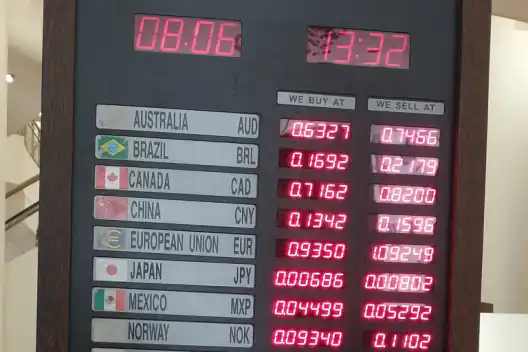 5.8 bpsTypical gap between the highest and lowest venue
Why Bitcoin's Price Differs Between Exchanges: 18 Venues Checked Every Minute
Vultax read Bitcoin's order books on 18 exchanges every minute for 28 hours. Half stayed within a basis point, the highest and lowest ordinary venues sat a median 5.8 bps apart, and Upbit ran 1.31% above. In four weeks of readings no gap survived fees; here is what a gap has to clear.
 $920.2MLargest spoofing penalty
Order-Book Spoofing: What It Looks Like in Live Data
Spoofing is defined by intent, which no market-data feed can observe. Here are the order-book patterns that stand in for it, and where they fail.
 115,006Alerts logged
115,006 Large-Trade Alerts: Where and When Crypto Whales Trade, by Venue and Hour
Every large-trade alert Vultax logged on six exchanges from 18 June to 3 September 2026: HTX carried 56% of large-trade notional, flow stayed close to balanced, 13:00–16:00 UTC held 23.6% of alerts, and weekends ran 23–30% quieter.
 51%–95%Published fake-volume estimates
Crypto Wash Trading and Real Liquidity: Fake-Volume Estimates Run From 51% to 95%
Published estimates put fake or non-economic bitcoin volume at 51% to 95%, and above 70% on unregulated venues. Why the studies disagree, why depth and slippage judge a venue better than volume (Binance: 64.3% of volume, 30.7% of depth, per Kaiko), and what to check yourself.
More from Insights
Photographs come from Wikimedia Commons under free licences. Each study names the photographer and the licence under its picture.
Continue your research in Vultax.
Explore crypto and prediction markets, trader analytics and event monitors. Public research views are free to browse.
New studies, by email.
Measured, sourced, and sent once per study. No digests, no promotions.